The SEA Labour Crisis: Why Your Restaurant Can't Find Staff and What Actually Works
From Singapore's 70% manpower shortage rate to Malaysia's 13% minimum wage hike and Thailand's new 400-baht daily wage, the F&B labour crisis is reshaping how restaurants operate across Southeast Asia.
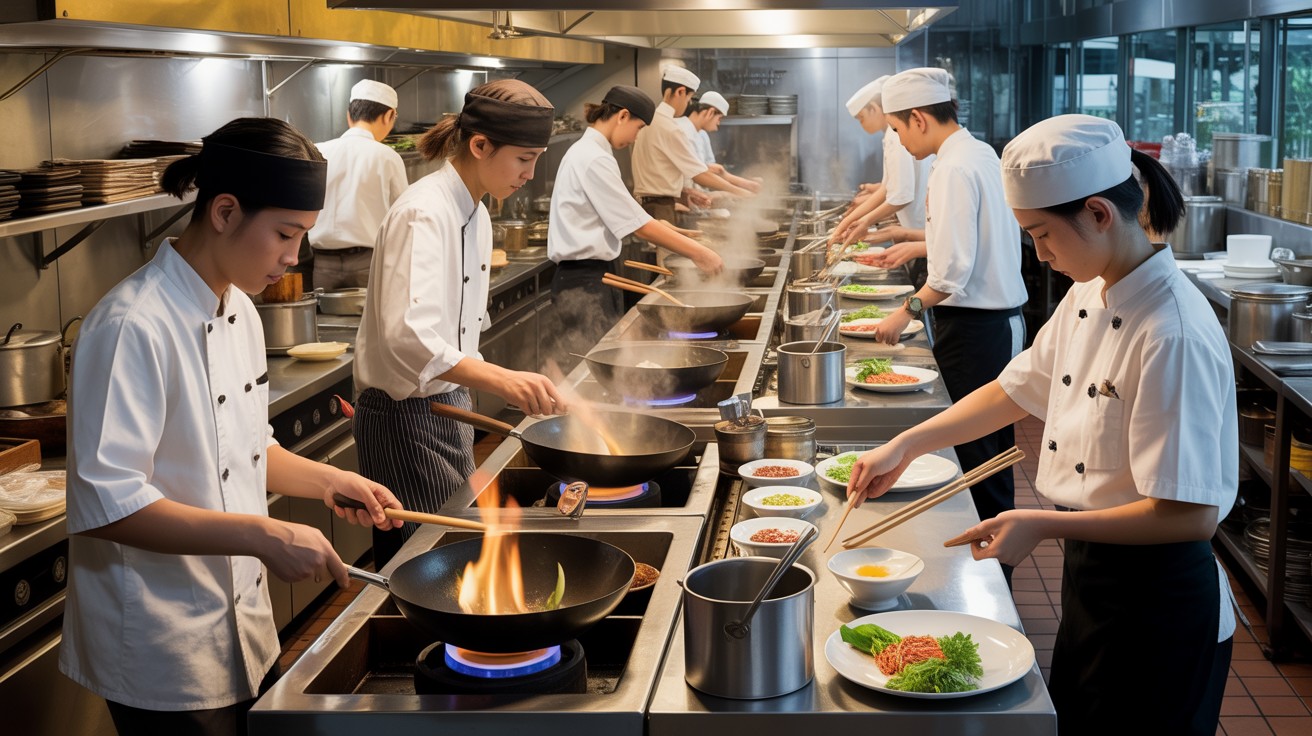
Ask any restaurant owner in Southeast Asia what keeps them up at night, and the answer is almost always the same: "I can't find people."
It's not a new problem, but it's getting worse — and the solutions that worked five years ago no longer apply. Minimum wages are rising, foreign worker policies are tightening, younger generations don't want F&B jobs, and the pandemic permanently changed how people think about work.
Let's look at the actual numbers, country by country, and then talk about what's actually working for the operators who've figured it out.
The Numbers: How Bad Is It?
Singapore
- 70% of F&B operators cite manpower shortage as their #1 operational challenge
- Staff turnover averages 4.2% per month — meaning you lose roughly half your team every year
- The median basic monthly wage for a primary waiter is just SGD 1,800 — among the lowest-paid roles in the economy
- Labour costs account for 28.5% of total operating costs on average
- Profit margins sit at a razor-thin 3-6%, leaving almost no room to raise wages
Malaysia
- Minimum wage increased to RM1,700/month (from RM1,500) effective February 2025 — a 13.3% jump
- This affects not just base pay but EPF contributions, SOCSO, EIS, and overtime calculations
- Full implementation for businesses with fewer than 5 employees kicks in by August 2025
- Non-compliance penalties: RM10,000 for first offense per employee, up to RM20,000 or 5 years imprisonment for repeat offenses
- The uniform national wage hits harder in less-developed states where demand is weaker
Thailand
- New daily minimum wage of 400 baht for hotel and entertainment venue workers (effective July 2025)
- Labour costs represent 15-20% of total expenses for most restaurants
- Persistent shortages as workers prefer the career paths and benefits offered by large chains
- Smaller eateries simply cannot match the compensation packages of major restaurant groups
Indonesia
- Rising labour costs across major cities, with higher electricity tariffs compounding the pressure
- Urban rental prices increasing simultaneously, creating a double squeeze
- Foreign firms without local production face particular difficulties competing on cost
Vietnam & Philippines
- Both markets experiencing rapid wage growth alongside an expanding middle class
- The Philippines' foodservice market growing at 14.52% CAGR creates fierce competition for experienced staff
- Vietnam's strict drink-driving penalties (Decree 100) have indirectly impacted F&B staffing patterns
Why Nobody Wants to Work in Restaurants Anymore
The labour crisis isn't just about money — though that's part of it. Five structural factors are at play:
1. The Work Is Genuinely Hard
Long hours (10-14 hour shifts), weekend and holiday work, physical demands, high-stress environments during peak service. In an era of work-life balance consciousness, this is increasingly unappealing.
2. Career Perception
Restaurant work is still perceived as low-status, temporary employment — a "stepping stone" rather than a career. This perception drives talented people to other industries before they ever get started.
3. Better Alternatives Exist
Gig economy work (delivery riders, e-hailing), retail, and service sector jobs often pay comparably with less demanding hours and more flexibility. Why stand in a hot kitchen for 12 hours when you can ride a motorcycle for 8?
4. Generational Shift
Millennials and Gen Z across SEA prioritise flexibility, meaningful work, and personal growth over job security. The traditional restaurant hierarchy feels outdated to them.
5. Foreign Worker Restrictions
Governments across the region are tightening foreign worker quotas and raising levies, particularly in Singapore and Malaysia. This shrinks the available talent pool right when demand is highest.
Free: Daily Operations Playbook
Download our proven daily operations playbook used by successful restaurant owners to run smooth, profitable shifts.
No spam, ever. Unsubscribe anytime.
What Actually Works: 8 Proven Strategies
1. Design Your Restaurant to Need Fewer People
This is the most important strategic decision you'll make. If your concept requires 20 staff to operate, and you can only reliably fill 14 positions, you don't have a staffing problem — you have a design problem.
- Self-ordering kiosks and QR-code ordering eliminate 1-2 front-of-house positions per shift
- Simplified menus (12-15 items) reduce kitchen complexity and the number of specialised roles
- Kitchen layout optimisation can reduce movement waste by 30% and allow one person to cover two stations
- Automated dishwashing and food prep equipment reduces the most labour-intensive back-of-house tasks
2. Pay Above Market — But Strategically
You can't afford to pay everyone 30% above market. But you can identify your 3-4 most critical roles and pay those people well above average. A strong head chef and two reliable shift leaders are worth more than 5 average staff members.
3. Create Real Career Paths
The operators retaining staff longest are the ones who show employees where they'll be in 2-3 years:
- Structured training programmes with visible milestones
- Clear promotion criteria (not arbitrary — objective and measurable)
- Cross-training that builds valuable skills
- Profit-sharing or bonus structures tied to restaurant performance
4. Embrace Flexible Scheduling
The rigid "full-time or nothing" model is dying. Smart operators are:
- Offering split shifts that accommodate study or family schedules
- Using part-time and freelance pools for peak periods
- Allowing staff to choose their shifts within a framework
- Providing predictable schedules published 2+ weeks in advance
5. Invest in Your Work Environment
Small investments with outsized retention impact:
- Air-conditioned kitchens (yes, the ROI is real when you factor in turnover costs)
- Staff meals that are genuinely good, not kitchen scraps
- Clean, comfortable break areas
- Recognition programmes that are frequent and sincere
6. Leverage Technology for Efficiency, Not Replacement
The goal isn't to eliminate humans — it's to make the humans you have more productive and less burned out:
| Technology | Staff Impact | Cost (SGD) |
|---|---|---|
| QR-code ordering system | Saves 1-2 FOH staff per shift | $200-500/month |
| Kitchen display system | Eliminates verbal order relay errors | $150-300/month |
| Automated inventory tracking | Saves 5-8 hours/week of manual counting | $100-200/month |
| Scheduling software | Reduces manager admin time by 50% | $50-150/month |
| Robotic food runner | Supplements 1 runner position | $1,500-2,000/month lease |
7. Build Partnerships With Training Institutions
Connect with local polytechnics, culinary schools, and vocational institutes:
- Offer internship programmes that provide genuine learning (not just free labour)
- Sponsor scholarships in exchange for work commitments
- Host industry talks that position your restaurant as an employer of choice
- In Singapore, tap into SkillsFuture funding for staff training
8. Consider Your Location's Labour Pool
When choosing a restaurant location, most people think about foot traffic and rent. Few think about where staff will come from. A restaurant in a central location accessible by public transport will have a much easier time attracting workers than one in a suburban mall that requires a car.
The Maths of Staff Turnover
Most operators underestimate how much turnover actually costs. Let's calculate:
| Cost Element | Estimate per Departure |
|---|---|
| Recruitment (ads, agency, time) | $500-1,500 |
| Training (2-4 weeks of reduced productivity) | $1,000-2,000 |
| Service quality dip during transition | $500-1,000 (estimated revenue impact) |
| Manager time for hiring process | $300-500 |
| Total cost per turnover | $2,300-5,000 |
If you have 15 staff and lose 50% per year (typical in SEA F&B), that's roughly $17,000-37,000 per year in turnover costs alone. Spending $5,000-10,000 on better wages, working conditions, and training suddenly looks like a bargain.
The Future of F&B Staffing in SEA
The labour crisis isn't going away. Wages will keep rising, restrictions will tighten, and worker expectations will continue to evolve. The restaurants that thrive will be the ones that build their entire business model around labour reality, not the ones that keep hoping things will go back to "normal."
Normal is gone. The new normal is fewer people, paid better, supported by technology, working in well-designed systems. Adapt now, or join the closure statistics.
Tags
Recommended Tools
Put This Knowledge Into Action
Use these tools to apply what you just learned