Menu Engineering for Profit: A Data-Driven Framework for SEA Restaurants in 2026
Your menu is the most powerful profit tool you own — and most owners waste it. Learn the four-quadrant menu engineering framework, why contribution margin beats food-cost percentage, and how to redesign your menu for profit in 2026.
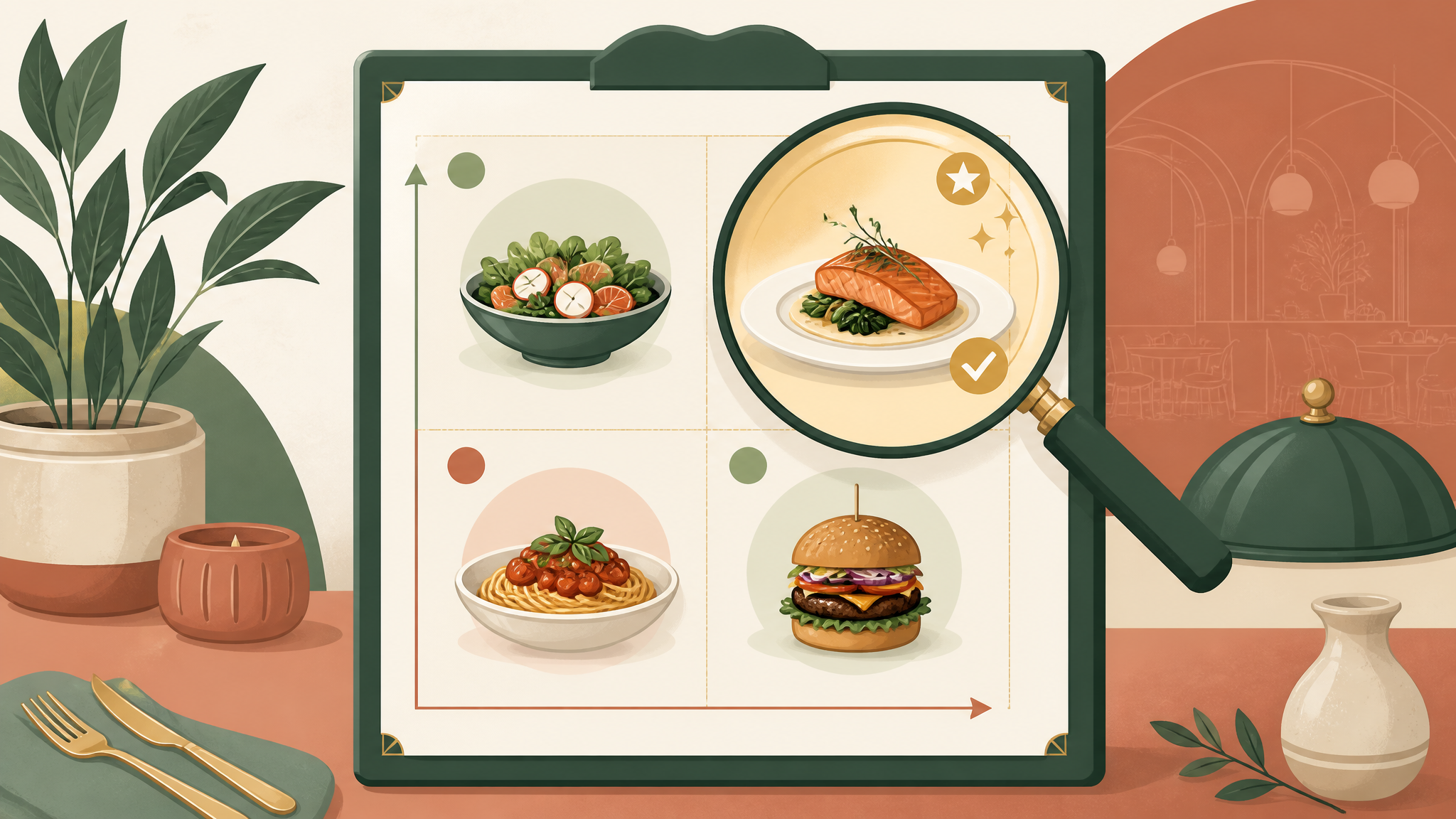
Your menu is not a list of dishes. It is the most powerful and most under-used profit tool in your entire operation. The same kitchen, the same rent, the same staff — and a well-engineered menu can lift your bottom line by several percentage points without a single new customer walking through the door.
This is menu engineering: the discipline of designing your menu around the numbers, not just the food. Here is the 2026 framework, built for the cost pressures Southeast Asian operators actually face.
Stop Using Food-Cost Percentage as Your Only Guide
The biggest mistake in menu decisions is ranking dishes by food-cost percentage alone. A dish with a 25% food cost sounds better than one at 38% — but percentages do not go into your bank account. Dollars do.
In 2026, the metric that matters is contribution margin (CM):
> Contribution Margin = Menu Price − (Food Cost + Direct Labour Cost)
Consider two dishes:
| Dish | Price | Food Cost | Food Cost % | Contribution Margin |
|---|---|---|---|---|
| Signature laksa | S$18 | S$6.30 | 35% | S$11.70 |
| Side salad | S$8 | S$2.00 | 25% | S$6.00 |
The laksa has the "worse" food-cost percentage — and nearly double the contribution margin. Sell the laksa and you keep almost twice as much money per plate. If you were pushing the salad because its percentage looked prettier, you were leaving money on every table.
And because labour is now expensive and scarce across the region, the smarter version includes direct labour. A dish with a low food cost that ties up your best line cook for eight minutes may quietly be a loser once you count that labour.
Free: Daily Operations Playbook
Download our proven daily operations playbook used by successful restaurant owners to run smooth, profitable shifts.
No spam, ever. Unsubscribe anytime.
The Four-Quadrant Matrix
The foundation of menu engineering is plotting every dish on two axes: profitability (contribution margin) and popularity (units sold). That gives you four categories:
| High Popularity | Low Popularity | |
|---|---|---|
| High Profit | Stars | Puzzles |
| Low Profit | Plowhorses | Dogs |
Plowhorses — high popularity, low profit. Customers love them but they strain margins. Do not remove them — they bring people in. Instead: raise the price slightly, tune the portion, or simplify prep to cut labour. Even a small margin lift on a high-volume dish is real money.
Puzzles — high profit, low popularity. Hidden gems that few people order. These are your biggest opportunity. Reposition them to prime menu real estate, rename them with mouth-watering descriptions, or have staff recommend them. A puzzle turned into a star is pure upside.
Dogs — low profit, low popularity. Margin leakage. They complicate your inventory, slow your kitchen, and earn little. Remove them or completely re-engineer them. Every dog you cut makes the rest of your menu sharper.
How to Actually Run the Analysis
You do not need fancy software to start — a spreadsheet and one month of POS data will do:
Re-run this quarterly at minimum. Commodity prices in Southeast Asia swing hard with currency and season, so a star can drift into plowhorse territory within months if you are not watching.
Menu Design Psychology That Actually Works
Once you know which dishes to push, design guides the eye toward them:
- The golden triangle. Eye-tracking shows guests look first at the centre, then top-right, then top-left. Put your stars and puzzles there — not your dogs.
- Drop the currency symbols. Menus that remove the "$" or "RM" reduce the "pain of paying" and lift spend. Write 18, not S$18.00.
- Descriptive language sells. Sensory, specific descriptions have been shown to lift item sales by up to 27%. "Slow-braised beef rendang, 6 hours" outsells "beef rendang" every time.
- Price anchoring. Place one premium item at the top of a section. It makes your mid-priced stars look like great value by comparison.
- Box your hero. A simple border or subtle highlight around one high-margin dish pulls the eye and lifts orders.
The 2026 Move: Leaner Menus
One of the strongest trends among profitable operators is cutting the menu by 20–30%. A smaller, focused menu:
- Reduces inventory and waste (fewer ingredients to stock and spoil)
- Speeds up the kitchen and improves consistency
- Cuts training time for new staff — crucial in a tight labour market
- Makes every remaining dish easier to execute well
In a region where labour is scarce and expensive, a bloated 80-item menu is a liability. Trim the dogs, double down on the stars, and your whole operation gets faster and more profitable.
The Bottom Line
Menu engineering is the rare profit lever that costs you almost nothing to pull. You already have the sales data. You already have the menu. All that is missing is the discipline to cost every recipe honestly, plot every dish, and design around contribution margin instead of gut feel.
Do it this quarter: cost your recipes, plot your four quadrants, cut your dogs, and move your puzzles into the golden triangle. It is the closest thing to free money in this business.
Tags
Recommended Tools
Put This Knowledge Into Action
Use these tools to apply what you just learned