Malaysia’s SST Expansion & E-Invoicing in 2026: The Compliance Shock Hitting Restaurants and Cafes
From 1 January 2026, restaurants and cafes earning RM1 million to RM5 million must issue e-invoices through LHDN’s MyInvois system — while an expanded SST regime squeezes margins further. Here is exactly what Malaysian F&B operators must do to stay compliant and protect their profit.
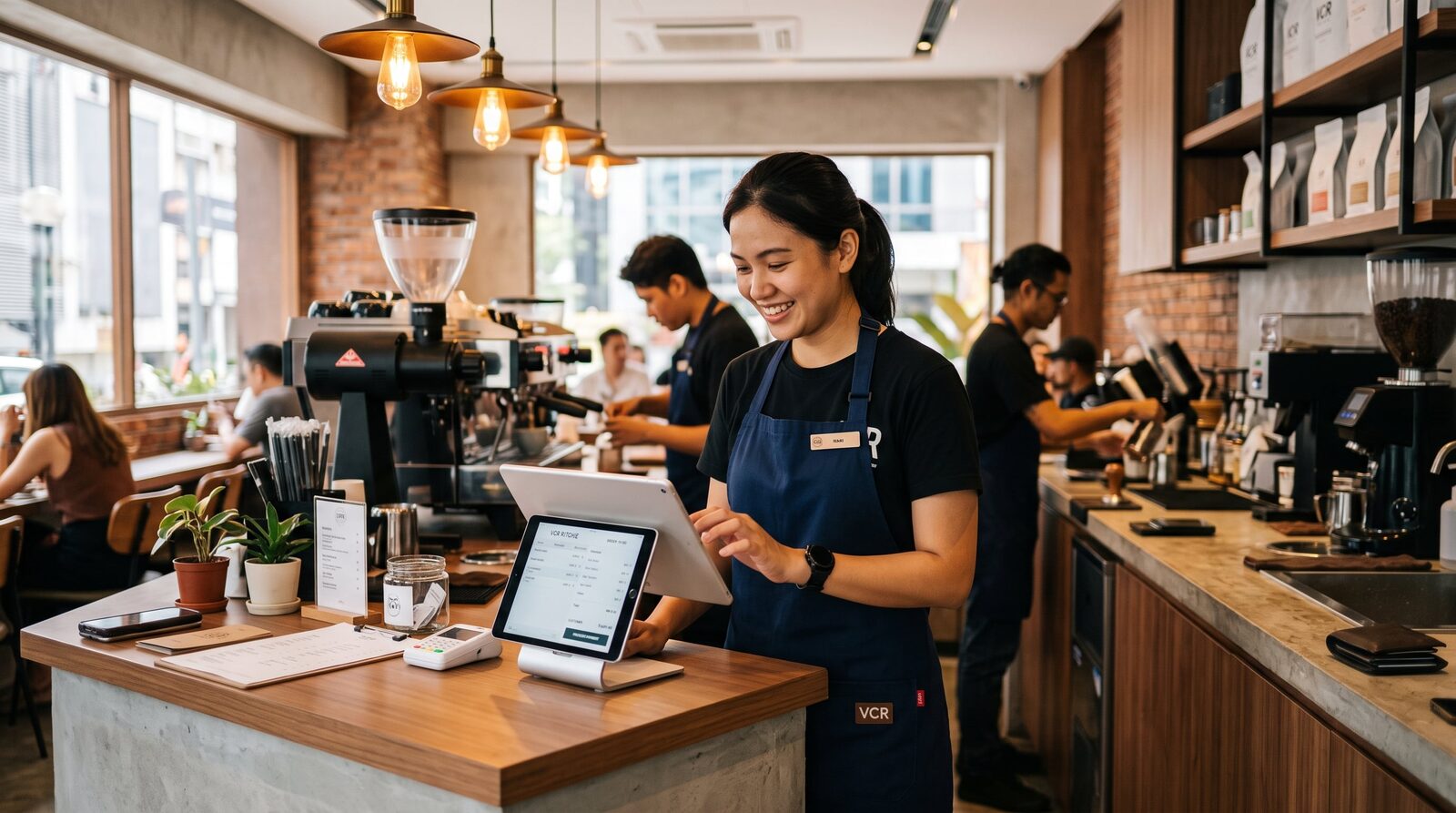
Here is what is actually changing, what it costs, and the exact steps to protect your business.
What Is Changing for Malaysian Restaurants and Cafes in 2026?
Two separate tax reforms are converging on the F&B sector at the same time:
Most coverage treats these as two abstract policy stories. For a restaurant owner, they are one very concrete problem: more paperwork, more system cost, and thinner margins — all landing in the same financial year.
When Does E-Invoicing Become Mandatory for My Restaurant?
The MyInvois rollout is staged by your annual turnover (based on your FY2022 revenue). Following LHDN’s December 2025 update, the exemption threshold was raised from RM500,000 to RM1 million, and the final phase was cancelled.
| Phase | Annual Turnover | Mandatory Start | Relaxation Period Ends |
|---|---|---|---|
| Phase 1 | Above RM100 million | 1 Aug 2024 | 31 Jan 2025 |
| Phase 2 | RM25m – RM100m | 1 Jan 2025 | 30 Jun 2025 |
| Phase 3 | RM5m – RM25m | 1 Jul 2025 | 31 Dec 2025 |
| Phase 4 | RM1m – RM5m | 1 Jan 2026 | 31 Dec 2027 |
| Below RM1m | Under RM1 million | Permanently exempt | — |
During the relaxation period (through 31 December 2027), Phase 4 businesses may issue consolidated e-invoices and are shielded from penalties under Section 120 of the Income Tax Act 1967, provided basic requirements are met. Treat this as a grace period to get your systems right — not an excuse to ignore it.
How Does MyInvois Actually Work?
Every invoice you issue must be submitted to LHDN’s MyInvois platform in a structured format (XML or JSON), validated, and returned with a Unique Identification Number (UIN) and a QR code before it is a legal document.
In practice, restaurants have two routes:
- MyInvois Portal — free, manual entry on the LHDN website. Fine for a business issuing a handful of invoices a month, painful at F&B transaction volumes.
- API integration via your POS or accounting software — the realistic option for restaurants. Modern POS and e-wallet-linked systems (many already used in Malaysia) now offer MyInvois-ready modules that validate invoices automatically.
For a high-volume cafe ringing up hundreds of transactions a day, the consolidated e-invoice provision is essential: you aggregate ordinary walk-in receipts and submit a single consolidated e-invoice, while issuing full e-invoices on demand to customers (typically businesses) who request one for their own claims.
Free: Restaurant Compliance Checklist
Stay compliant with our comprehensive checklist covering food safety, health regulations, and licensing requirements.
No spam, ever. Unsubscribe anytime.
What Does Compliance Cost?
The hidden cost of e-invoicing is not the tax — it is the systems, training, and time.
| Cost Item | Typical Range | Notes |
|---|---|---|
| MyInvois-ready POS upgrade | RM0 – RM3,000/outlet | Many providers bundle it into subscriptions |
| Accounting software / middleware | RM50 – RM300/month | For API submission & archiving |
| Staff training | RM500 – RM2,000 | One-off, per outlet |
| Bookkeeping / accountant time | RM200 – RM800/month | Reconciliation & consolidated filing |
| Record archiving (7 years) | Minimal | Legal requirement under ITA 1967 |
Penalties for non-compliance after the relaxation period are steep: fines from RM200 to RM20,000 per invoice, or imprisonment of up to six months. For a restaurant issuing thousands of invoices, non-compliance is not survivable.
How Does the Expanded SST Hit Food & Beverage?
Separately from e-invoicing, the SST scope was widened in July 2025. Key points for F&B operators:
- Service tax on F&B remains at 6% (the standard service tax rate is 8%, but food & beverage keeps the lower 6% band).
- The wider SST net now captures more of your supply chain — leasing, certain construction and professional services, and other inputs that feed into your cost base. Even if your menu prices are taxed at 6%, your rent, fit-out, and service contracts may now carry higher embedded tax.
- Registration threshold and taxable service classification still matter — confirm whether your outlet crosses the SST registration threshold for prepared food service.
The net effect: your cost of doing business rises even where your headline tax rate does not. Operators who fail to re-cost their menus in light of higher input taxes will quietly lose 1–3 points of margin.
What Should Malaysian F&B Operators Do Right Now?
👉 [Model your true monthly costs and breakeven with our free City Cost Calculator](/tools/startup-cost-by-city) — it includes current 2026 data for KL, Penang, JB and other Malaysian cities so you can price for the new tax reality.
Frequently Asked Questions
Do small cafes in Malaysia need e-invoicing in 2026?
Only if annual turnover reaches RM1 million or more. Cafes below RM1 million are permanently exempt under the December 2025 threshold change — but should still keep clean digital records, as crossing the threshold triggers the mandate.
What is the penalty for not issuing e-invoices?
After the relaxation period, fines range from RM200 to RM20,000 per invoice, with possible imprisonment of up to six months. Phase 4 businesses have penalty relief until 31 December 2027.
Is SST charged on restaurant food in Malaysia?
Service tax on food & beverage is charged at 6% (below the standard 8% service tax rate), subject to the SST registration threshold for prepared-food service. The 2025 SST expansion mainly raises embedded tax on your supply chain inputs.
How long must I keep e-invoice records?
Seven years, under the Income Tax Act 1967 — even though LHDN only retains validated invoices on MyInvois for two years.
The Bottom Line
2026 is the year Malaysian F&B goes fully digital on tax. E-invoicing plus an expanded SST means the era of loose bookkeeping is over. The operators who treat compliance as an operational discipline — not an afterthought — will protect their margins and their licence to trade. The ones who improvise will bleed money in penalties and lost deductions.
👉 [Not sure your numbers still work under the new rules? Take our free Restaurant Readiness Quiz](/quiz) — it stress-tests your financial and operational preparedness in under 5 minutes.
Tags
Recommended Tools
Put This Knowledge Into Action
Use these tools to apply what you just learned